

Using Liquid Garden Chemicals the Correct Way
- The Home & Garden Store

- Jan 31
- 3 min read
A Practical Guide for Mixing Liquid Chemical Products in Quart-Sized Containers
By Charlie Hartman – Idaho Certified Nurseryman
The Home & Garden Store — Boise, Idaho
Many liquid garden products come with directions based on gallons of water per unit of chemical. A typical pump-sprayer is either a 1 or 2 gallon size container and sometimes even larger for commercial applications. That works great for landscapers, but most homeowners aren’t mixing a full gallon at a time. When you’re treating a single shrub, a couple of perennials, or a small planting project, you usually only need one quart of solution.
At The Home & Garden Store, we hear this question all the time:
“How do I mix this if I only want to make a quart?”
Let’s break it down in a simple, no-nonsense way.

Why Quart-Sized Mixing Matters
Mixing smaller batches helps you:
• Avoid wasting product
• Apply the correct amount (overuse can damage plants)
• Keep chemicals fresh and effective
• Make quick, small jobs easier
Most importantly, it keeps your gardening safe and precise, especially when working with concentrated liquids.
Understanding the Math (Made Easy)
A gallon contains 4 quarts.
So, if a product says:
“Use 3 tablespoons per gallon”
then for 1 quart, you simply divide by 4:
• 3 tablespoons ÷ 4 = ¾ tablespoon per quart
• ¾ tablespoon = 2¼ teaspoons:
Common Conversions for Quart-Sized Mixing
This works for most liquid products that are purchased as a concentrate.
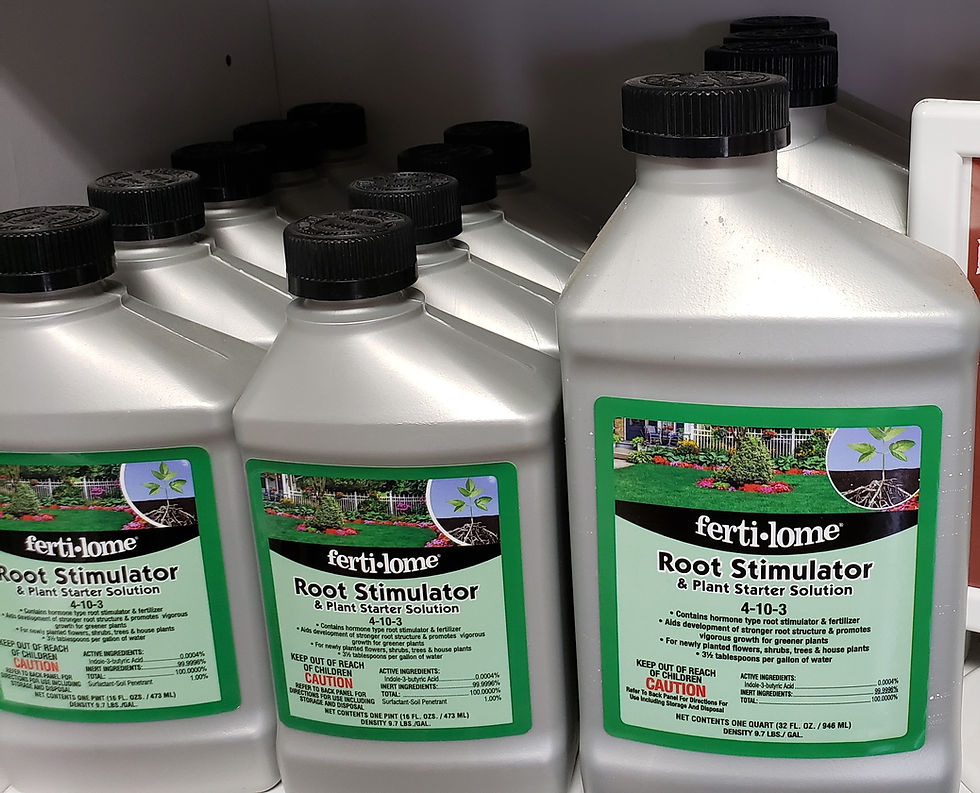
Two examples Using Popular Ferti-lome Products
Ferti-lome Root Stimulator
Typical rate: 3½ tablespoons per gallon
Per quart:
• 3.5 tbsp ÷ 4 = 0.875 tbsp
• 0.875 tbsp ≈ 2¾ teaspoons
Ferti-lome Tree & Shrub Food
Typical rate: 1 tablespoon per gallon
Per quart:
• 1 tbsp ÷ 4 = ¾ teaspoon
These smaller measurements make it easy to mix just what you need for a small planting. We typically have available 1-quart sprayers that many of our customers use, but we also carry a small 1-quart pump sprayer if needed.
How to Mix Safely and Effectively
• Use a dedicated measuring spoon — not your kitchen set
• Mix outdoors or in a well‑ventilated area
• Add water first, then the chemical
• Stir or shake gently to blend
• Apply immediately for best results
• Rinse your tools afterward
And of course, always follow the product label — it’s the law and the safest guide.
Possible Reasons Why You Should You Use Chemical Products?
• When planting trees, shrubs, perennials, vegetables, herbs or annuals
• Treating for insects or diseases
• To improve the overall health of plants
Just to clarify, chemicals include organic as well as inorganic and just because it’s organic, it doesn’t mean it’s safe under all conditions. Always read and follow the manufactures directions when using a product, whether its organic, inorganic, liquid or granular.
Boise’s high-desert climate can be tough on new plantings, so using the correct products can make a noticeable difference in the establishment and vigor of plants.
Need Help? Stop by The Home & Garden Store
If you’re unsure about mixing rates, plant needs, or timing, our team at The Home & Garden Store in Boise is always happy to walk you through it. Bring the product label, a photo of your plant, or your planting plan. We love helping gardeners get it right the first time.
Whether you’re planting a single rose or refreshing your whole landscape, we’re here to make gardening easier, safer, and more successful.



Comments